In 2013, a Google engineer walked into a San Francisco bar wearing a $1,500 face computer, and by the time the cultural dust settled, 'Glasshole' had entered the dictionary and an entire product category had been buried with full honors. That funeral is worth remembering this week, because Even Realities — a smart-glasses startup founded by former Apple engineer Will Wang — just raised $150 million in a pre-Series B that lifted it to a $1 billion valuation. A decade after the first wave of face computers face-planted in that bar, glasses are back, the money is bigger than ever, and the thing that changed isn't the hardware. It's the AI behind it.
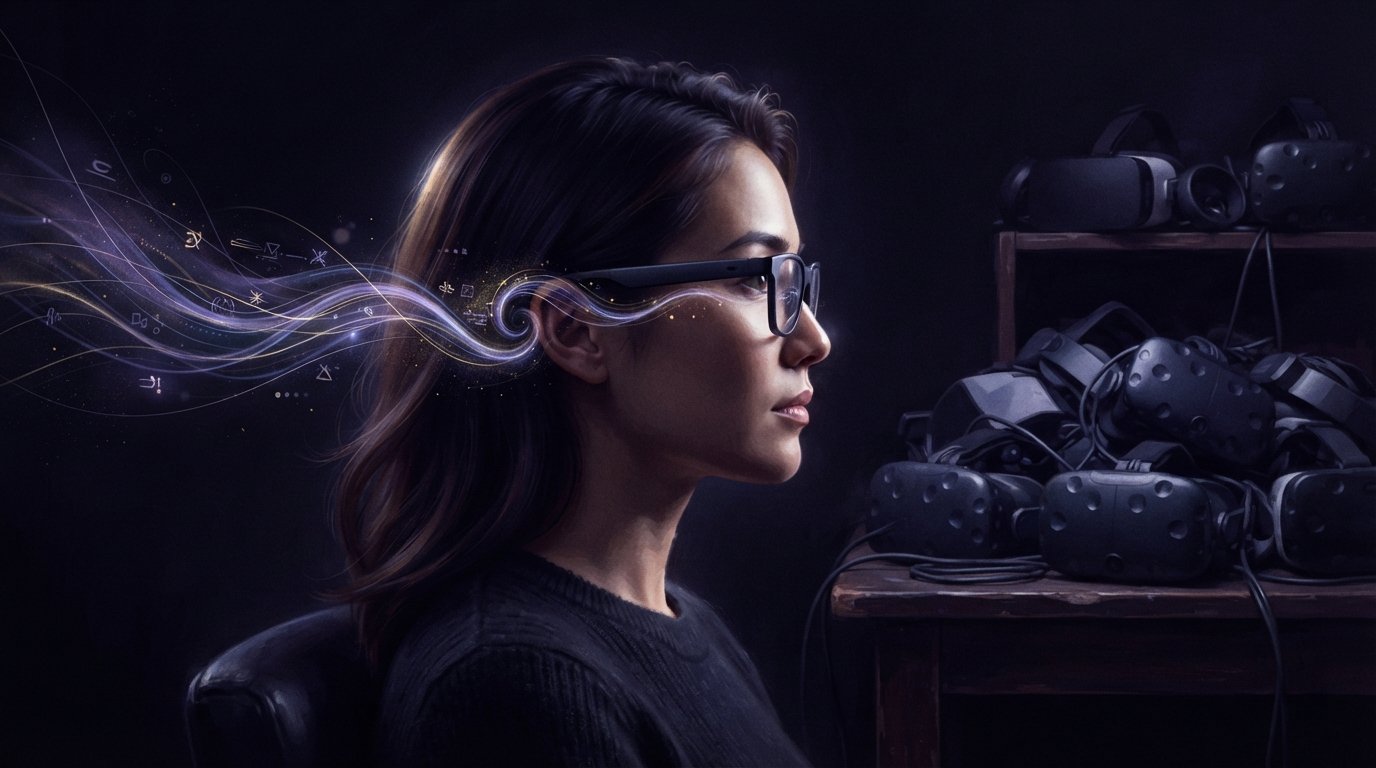
Here's the honest version of why this form factor suddenly works when it so publicly didn't before. Google Glass failed — and the AR headsets after it struggled — because they tried to put a screen on your face: a smartphone's worth of interface crammed into hardware with no room for it, solving a problem nobody had. The AI-native pitch is fundamentally different. The glasses aren't a display; they're a pair of eyes and ears for an assistant that lives in the cloud, whispering the answer rather than showing you an app. Less screen, more sense. That inversion — from output device to input device — is a genuinely better fit for what a pair of glasses can physically be, and it's the real reason the money is flowing again.
What's actually real
The capital is real: a $1 billion valuation on a $150 million round is a market vote, not a demo-day flourish, and it lands in a week when the broader funding environment is already historically hot (our markets desk covers the record $510 billion half elsewhere in this issue). And the use cases that work today are real too — but they're the narrow, ambient ones, and it pays to be specific. Live translation whispered in your ear, in conversation, at conversational speed. Hands-free capture and recall — 'what was on that whiteboard, where did I park, what did she say her name was.' Turn-by-turn guidance without pulling out a phone. Quick what-am-I-looking-at lookups. These are small, real, daily utilities, and small daily utilities are historically what makes wearables stick — the smartwatch didn't win on revolution either, it won on glanceable notifications and step counts.
The use cases that don't work yet are the ones the concept videos are selling: rich persistent AR overlays painted on the world, all-day battery under real load, anything that needs a serious display doing serious work. The physics of optics, heat, and batteries hasn't been repealed — it's been sidestepped, by making the display optional. As always, the demo reel will blur the line between the two categories. Your job as a buyer, and mine as a reviewer, is to keep them separate.
The old glasses put a phone on your face. The new ones put eyes and ears on an assistant that lives somewhere else. That's the whole difference.
The part worth being honest about
Glasses that see and hear everything you do are a privacy proposition before they're a product one, and 'the assistant is always listening' is a sentence that should give everyone pause — including the enthusiasts buying in. This is the same social contract Glass violated in that bar thirteen years ago, and the violation, not the battery life, is what actually killed it: people around the wearer never consented to the camera. The new wave has learned some lessons (recording indicators, audio-first designs that de-emphasize the camera), but the fundamental tension is unresolved, and it sharpens as the assistant gets smarter — a camera that remembers is one thing; a camera that understands is another. The companies that win this category will be the ones that get the trust model right, for wearers and for everyone standing near them — not just the ones with the best translation latency. That's the real race, and it has barely started.
Where this goes
Watch three things. Whether the incumbents' next generation (Meta's Ray-Ban line has already proven the audio-first formula sells) forces the startups toward niches or acquisitions. Whether battery life quietly crosses the all-day threshold — the boring spec that decides whether glasses are a device or an accessory. And whether any player ships a trust feature so legible — a hardware shutter, a visible recording state that can't be spoofed — that it becomes the category's seatbelt: the thing everyone copies because selling without it starts to feel negligent. When that happens, this category stops being a gadget story and starts being an ambient-computing story. The $150 million says investors think that's soon. The unresolved bar-stool problem says maybe — but only for the companies that remember why the first funeral happened.
- Even Realities raised $150M at a $1B valuation — smart glasses are back.
- What changed: glasses are now eyes and ears for a cloud assistant, not a screen.
- Works today: live translation, capture-and-recall, turn-by-turn, quick lookups.
- Doesn't work yet: persistent AR overlays and all-day battery — physics wasn't repealed.
- Caveat: always-on cameras killed Glass once; the trust problem is still unsolved.