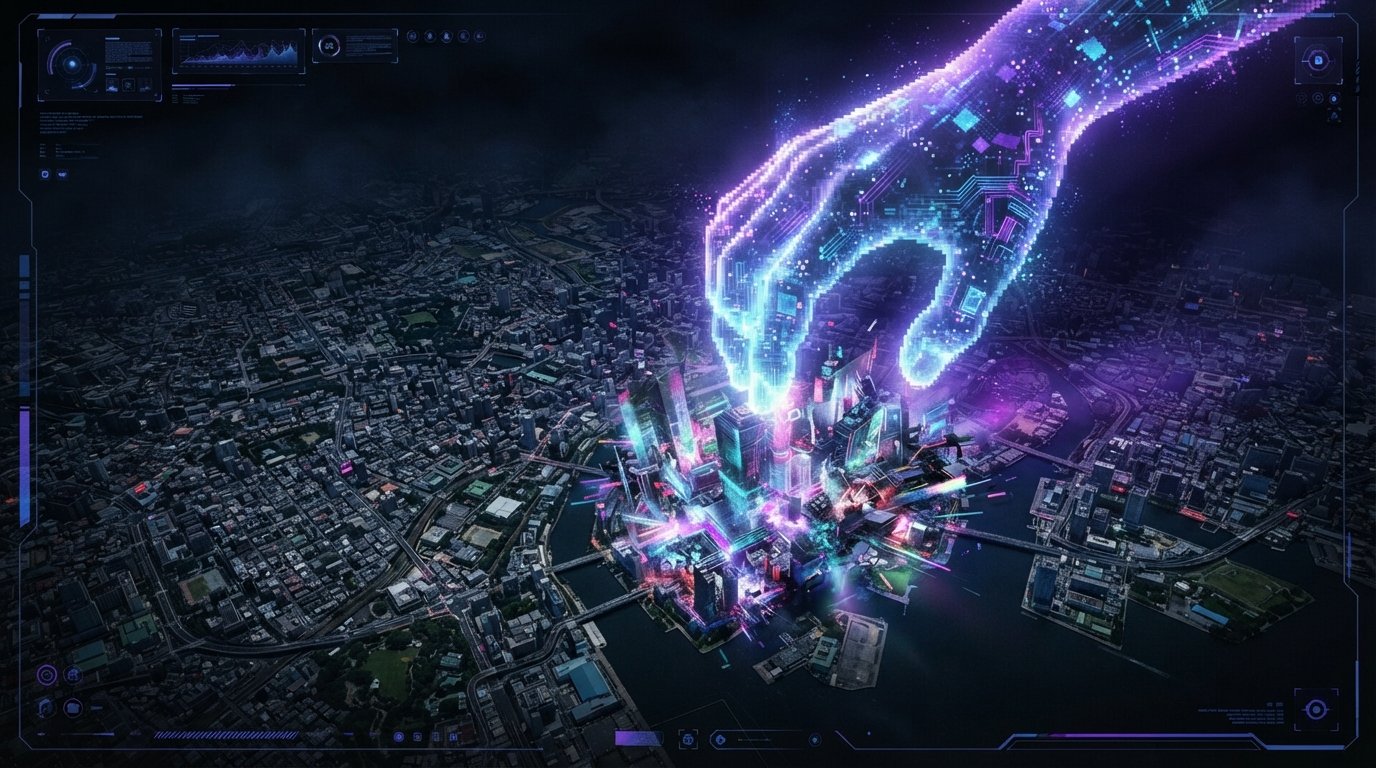
Google Earth got an AI image generator on July 30, 2026, and lost it again before the next day was out. The "create image" tool, built on Google's Nano Banana 2 model, let anyone zoom into any point on the map, type a text prompt, and receive a photorealistic scene anchored to that location's real satellite, aerial and 3D imagery — a historical rebuild, a proposed building, or something stranger, generated in up to two minutes. Google announced the feature on its official Google Earth account the same day it shipped, describing it as grounded in the platform's own geospatial data rather than a generic image generator bolted on top. By July 31, the company had pulled it, saying it was "rolling back this feature in Google Earth while we work on implementing stronger guardrails."
What went wrong, specifically
Google's own account of the reversal was specific about what it saw and where the line was. "We know that people uniquely trust Google Earth for a reliable view of the world," the company said in its rollback statement. "We've seen geospatial professionals using this feature for a range of useful purposes, however we've also seen people sharing screenshots of generated imagery that appear to violate our policies." Coverage of the rollback pointed to two examples that circulated within hours of launch: a fabricated blast crater generated over a real Los Angeles location, and a scene showing protesters outside Google's own Mountain View headquarters — neither event real, both rendered onto genuine satellite and street-level reference data. According to Engadget, the rollback followed 404 Media demonstrating the tool's capacity to produce that kind of misleading imagery of real, identifiable places.
Twenty-four hours, launch to rollback
- Jul 30, 2026 — Google launches AI image generation in Google Earth's web version, powered by Nano Banana 2.
- Jul 30-31, 2026 — 404 Media demonstrates the tool generating misleading imagery of real, identifiable places, including a fabricated blast crater and staged protests at Google's own headquarters.
- Jul 31, 2026 — Google rolls the feature back, citing shared screenshots that violated its policies.
The tool wasn't undefended. Every image it generated carried a SynthID watermark — an invisible signal, readable through Gemini or Search Lens, that flags an image as AI-generated — and Google said the outputs were never written into the default map view other users see. Both of those are real safeguards against someone mistaking a generated scene for Google Earth's actual documentary record while using the product itself. Neither one addresses the failure mode that actually played out: a user takes a screenshot, posts it without the prompt or caption that explained it was generated, and the platform it lands on gives the next viewer no built-in reason to go check.
How a generated scene outruns its own label
- Generates a photorealistic scene anchored to real terrain, invisibly marked with SynthID.
- Screenshots the result and posts it to social media, without the prompt or caption.
- Strips surrounding context on repost; the SynthID check requires a deliberate extra step in Gemini or Search Lens.
- Sees what looks like a real satellite photo, with no built-in prompt to question it.
Why this cuts differently than a chatbot image
Nano Banana 2 wasn't new on July 30 — Google had already rolled the model out elsewhere in the weeks before, generating images inside Gemini and other consumer products to strong early reception. What changed was the surface. An image generated in a chat window carries the obvious context that it came from a chat window. An image generated inside Google Earth — the product people open specifically because they trust it as a reference — inherits the credibility of the base map it's drawn on top of, whether the generation is labeled or not. That's the same tension this newsroom has watched play out elsewhere this summer: San Francisco ordered Apple and Google to pull "nudify" apps from their stores over the same gap between what a generative tool can produce and what a platform can actually stop from spreading once it's out.
What Google hasn't said
Google didn't give a timeline for bringing the feature back, and hasn't detailed what "stronger guardrails" will actually mean — tighter prompt-level refusal, output review before a user can save or share a result, or something else. The company also hasn't said how many generated images were flagged, or whether the Los Angeles and Mountain View examples were isolated or representative of a broader pattern in the roughly 24 hours the tool was live. Coverage of the reversal is sourced almost entirely to Google's own rollback statement and to the outlets that documented the misuse directly; there is no independent tally yet of how widely the problematic images actually spread before the feature came down.
The one-day round trip is itself a small data point worth reading correctly. It isn't evidence that Google's review process is broken — a company the size of Google can pull a live feature from a major product in hours once it decides to, and it did. It's evidence of something closer to the opposite problem: nothing in the launch review apparently flagged "a reference map product can now generate fake documentary-style imagery of real places" as a distinct risk category from "a chat app can generate a fake image." That's the gap a relaunch actually has to close, and it's a harder one than shipping a watermark, because it means treating the product's own trustworthiness as part of the threat model, not just the output. The fabricated blast crater and the staged protest both carried a SynthID watermark the whole time, which nobody checked before sharing — here's how to actually run that check on an image like either one.
- Google launched an AI image generator inside Google Earth's web version on July 30, 2026.
- Users could type a prompt and get a photorealistic scene anchored to any real location.
- Within a day, generated images showed a fabricated Los Angeles blast crater and staged protests.
- Google rolled the feature back July 31, citing screenshots that violated its policies.
- Caveat: outputs carried invisible SynthID watermarks, but viewers rarely check before sharing.