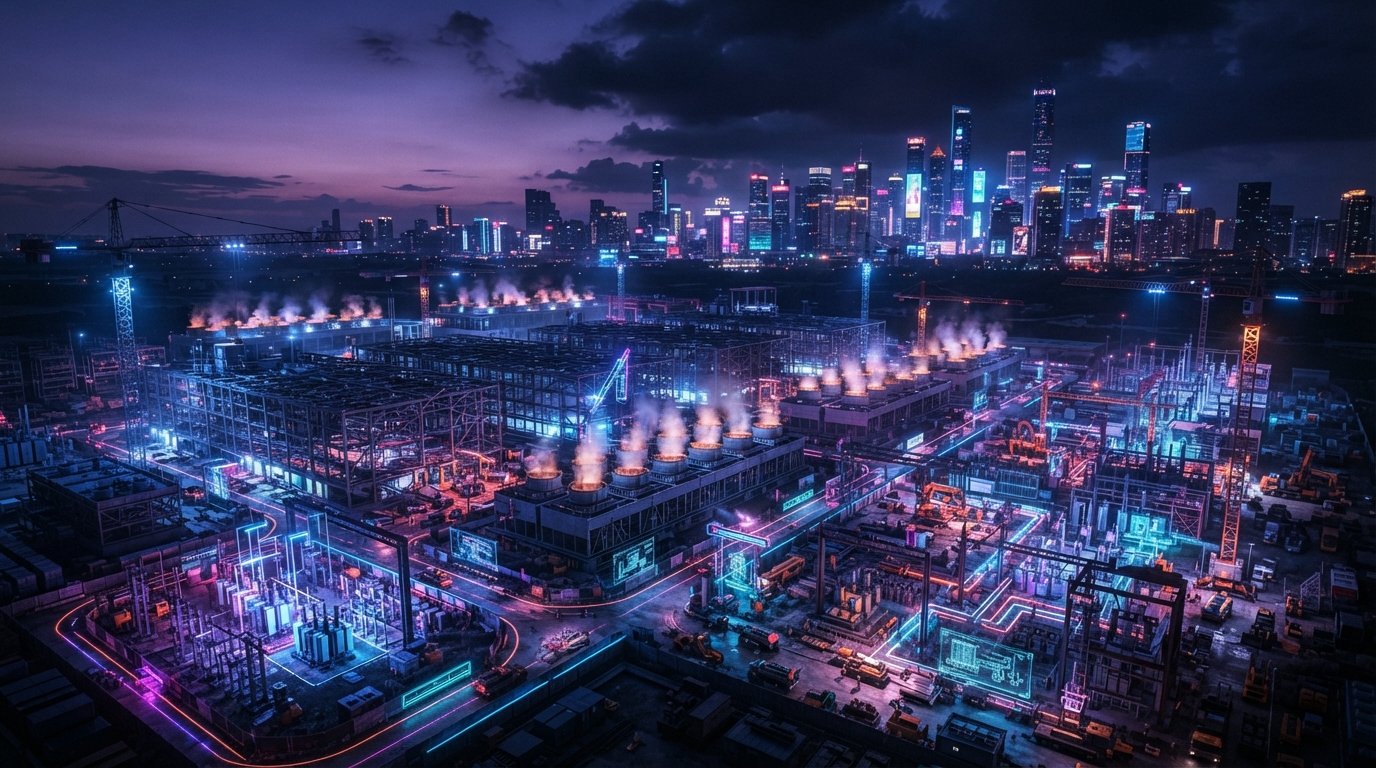
Anthropic, Macquarie Asset Management and Singapore's sovereign wealth fund GIC announced August 10 that they are forming a new company, Theseus Infrastructure, to develop, own and operate AI data centers in the United States. Funds managed by Macquarie and GIC will supply the majority of the equity for each project and own the resulting platform; Anthropic signs on as anchor tenant, leasing the finished capacity under long-term contracts rather than building or owning the facilities itself. The companies describe an initial US focus, with Anthropic citing rising demand for Claude as the reason more compute is needed.
What the joint announcement does not say is the more notable part. It names no total dollar figure, no site count, no megawatt or gigawatt capacity target, and no completion date. No individual executive from any of the three parties is quoted by name — only a general statement, attributed to Anthropic, that demand for Claude "continues to grow rapidly across businesses, developers, and consumers, and meeting that demand requires significant new compute." For a deal being compared to OpenAI's Stargate in scale of ambition, the absence of the numbers that usually anchor an infrastructure announcement this size is itself the story.
What kind of deal this actually is
Structurally, Theseus is a real-estate financing vehicle wearing an AI-infrastructure name. Macquarie and GIC put up the capital, build and own the data centers, and collect rent; Anthropic gets guaranteed capacity without adding the construction cost or the asset itself to its own balance sheet. That is not a new trick in this specific industry this year — Meta has moved roughly $279 billion of data-center leases off its balance sheet, and Google has guaranteed some $44 billion of rent on buildings it will never own, according to reporting on the broader financing pattern behind AI's 2026 buildout. The advantage for a company like Anthropic, which is widely understood to be positioning for eventual public markets, is that operating leases read very differently to investors than the kind of ballooning capital expenditure line frontier labs have otherwise been reporting all year.
Theseus Infrastructure's structure
- Theseus Infrastructure — Anthropic leases capacity from Theseus; it does not own or build the facilities itself.
It is also not the first time this specific pattern has shown up around Anthropic. Reporting on the Theseus announcement notes Anthropic previously took on a $35 billion loan, backed by Google, to lease chips across five data centers rather than buying the hardware outright — the same capex-to-opex logic, applied to compute instead of buildings. Two deals inside one year, both structured so a fast-growing lab gets guaranteed capacity while someone else's balance sheet absorbs the asset and the long-run utilization risk.
Three AI labs' leasing numbers this year, and what each covers
- $279B · Meta, data-center leases
- Leases moved off Meta's balance sheet
Includes: Long-term data-center lease obligations reclassified as operating expense
Excludes: Any figure specific to Theseus or Anthropic - $44B · Google, guaranteed rent
- Rent guaranteed on buildings Google will never own
Includes: Long-term rent guarantees on third-party-owned data-center capacity
Excludes: Ownership of the underlying real estate - $35B · Anthropic, chip-lease loan
- Prior Google-backed loan to lease chips at five data centers
Includes: Compute-hardware leasing across five existing sites
Excludes: Any new capacity Theseus will build
The one number that is disclosed
Theseus's own announcement is silent on cost, but it lands next to a commitment Anthropic did put a number on. In February, Anthropic pledged to cover 100% of the grid-upgrade costs tied to its data centers and to work with utilities to offset any demand-driven rise in consumer electricity prices, rather than let ratepayers absorb the cost of connecting new AI capacity to the grid. Theseus's facilities, once sited, would fall under that standing pledge. It is a live question this year well beyond Anthropic: this publication's own reporting has tracked how Congress, five state governments and the White House are all currently citing different, non-comparable numbers in the fight over who actually pays for AI data centers' power draw — the same underlying dispute Anthropic's commitment is trying to get ahead of.
- Theseus will develop AI data centers with Anthropic as anchor tenant
- The deal's total dollar value
- Planned data-center capacity, in megawatts or gigawatts
- Electricity-rate protection will extend to Theseus's future sites
None of that makes the deal smaller than it's being read as — Anthropic does not sign anchor-tenant leases with sovereign-wealth-fund-backed vehicles for capacity it doesn't expect to need. But a story with this little disclosed arithmetic is, for now, a structure more than a set of facts: real estate and financing changing hands so that a fast-growing AI lab's balance sheet keeps looking like a software company's for a while longer, even as its actual compute footprint keeps expanding at data-center scale.
- Macquarie Asset Management and GIC formed Theseus Infrastructure to build AI data centers.
- Anthropic is the anchor tenant, leasing capacity under long-term contracts rather than owning buildings.
- Neither party disclosed a dollar figure, megawatt count, or completion timeline.
- Anthropic separately committed in February to cover any resulting consumer electricity-rate increases.
- Caveat: the structure converts Anthropic's capex into rent, the same off-balance-sheet playbook Meta and Google used this year.