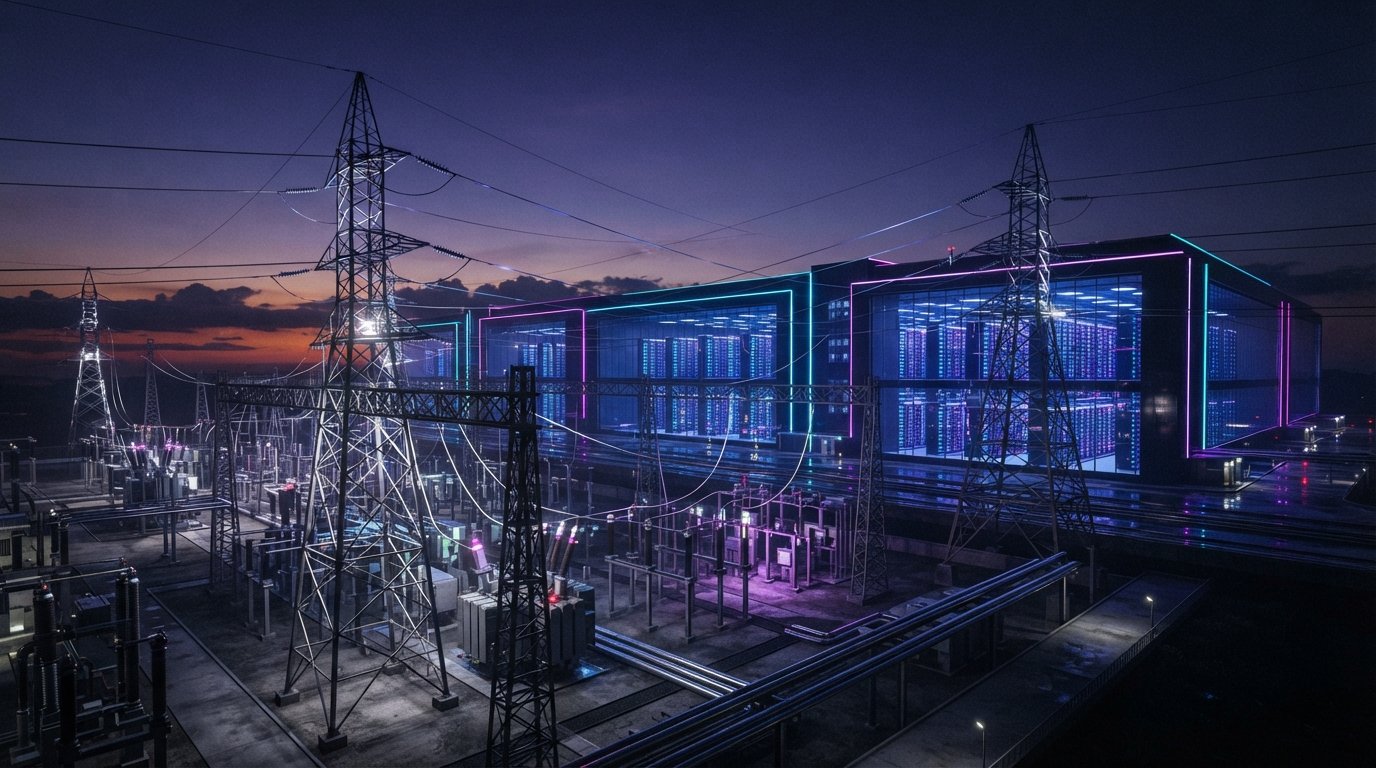
NVIDIA, Google and the infrastructure-software startup Emerald AI launched the AI Energy Management Alliance (AEMA) on September 16, a coalition of 18 member companies organized around a single bet: that AI data centers willing to flex their electricity draw during grid stress can add usable capacity to the US grid faster than building new power plants or transmission lines ever could. NVIDIA's own announcement frames the goal as building "AI infrastructure that doesn't just connect to the grid but works with it."
Beyond the three founders, the launch names Anthropic -- described in the alliance's own materials as the AI frontier lab, not just an infrastructure buyer -- plus utility National Grid and power producers AES and NRG as founding members. NVIDIA's announcement describes the remaining roster only in categories: AI platforms, infrastructure providers, data-center operators, power producers, utilities and regional grid operators, spanning the full chain from the company that trains a model to the company that keeps the lights on nearby.
The headline number comes from Emerald AI CEO Varun Sivaram's own op-ed announcing the alliance: "America could unlock 100GW on our existing grid for flexible data centers" if AI data centers demonstrate moderate flexibility during peak grid hours -- pausing or throttling non-urgent compute load rather than pulling a constant maximum draw around the clock. For scale, 100 gigawatts is roughly a quarter of all US data-center capacity currently online or under construction industry-wide, by most industry trackers' estimates -- a very large number to unlock without pouring a single new foundation.
What the '100 gigawatts' figure actually covers
- 100 GW
- AEMA's own estimate of grid capacity potentially unlockable for flexible AI data centers
Includes: Capacity theoretically achievable if AI data centers reduce draw moderately during a utility's own peak-demand hours, using the grid that already exists
Excludes: Any new power plant, transformer, substation, or transmission line; independent verification by a grid operator, regulator, or the Department of Energy
(A power grid is sized for its worst hour, not its average one -- a data center that pulls the same load at 3 a.m. as it does during a July heat-wave peak forces a utility to build for the peak everywhere. "Flexibility" means giving that up occasionally in exchange for connecting faster.) That framing matters because power, not chips, has been the actual bottleneck slowing AI's buildout all year. Large power transformers are running lead times of up to four years in the most constrained parts of the US market, and Texas grid operator ERCOT was tracking roughly 410 gigawatts of large-load interconnection requests as of its most recent hearing materials -- a queue with no fast way through it that doesn't involve either new physical infrastructure or demand that can move around the constraint instead of adding to it.
How a 'flexible' data center is supposed to work
- Signals a period of peak stress or constrained local supply
- Temporarily reduces electricity draw -- pausing non-urgent training jobs, not live inference traffic
- In exchange, offers faster interconnection approval and skips or delays new peaker-plant construction it would otherwise need to serve that same demand at full, constant draw
Anthropic's presence on the founding roster reads differently against its own record. In February, Anthropic pledged to cover 100% of the grid-upgrade costs tied to its own data centers and to work with utilities so its demand doesn't drive up consumer electricity bills nearby -- a commitment to pay for the capacity it uses, not to use less of it. AEMA is a different lever on the same problem: instead of paying for more grid to be built, member companies commit to needing less of it at the moments it's scarcest. The two commitments are compatible, but they are not the same promise, and the launch materials do not say which one Anthropic considers primary going forward.
"America could unlock 100GW on our existing grid for flexible data centers." -- Varun Sivaram, CEO, Emerald AI, in the alliance's own launch op-ed
- Get a standardized mechanism to interconnect more AI demand without building new peaker plants first -- if member companies actually honor the flexibility commitment when asked.
- Trade some scheduling control over training workloads for faster grid access -- a real cost that's only visible once a utility actually calls on the commitment during genuine stress, which hasn't happened yet.
- Stand to benefit if flexible demand genuinely reduces the peak-driven price spikes and new-infrastructure costs that Congress, five states and the White House have all been fighting over how to allocate this year.
NVIDIA's announcement is more specific about the mechanics than the headline number suggests. Under a section it calls "reliability remains paramount," the alliance commits to defining "ride-through, curtailment and contingency-response obligations before a facility connects" -- rules for staying connected through brief grid disturbances, cutting power on request, and responding to emergencies -- plus standardized performance metrics, "risk-adjusted" interconnection pathways for members making "credible and verifiable" flexibility commitments, and cost allocation tied to "avoided upgrades and improved ramping capability" rather than a flat rate. That is a real technical framework, not just a slogan -- but it is also, as written, a framework the alliance intends to build, not one it has finished building. No contract language, penalty structure, or third-party verification standard has been published alongside the launch.
That gap between stated framework and enforceable commitment is exactly where past demand-response programs in other industries have struggled -- a utility offering a rate discount for flexibility is a known mechanism; a coalition of AI labs and chipmakers promising to write one together, at data-center scale, for a workload as unpredictable as frontier-model training, is not. Training runs are scheduled around compute availability and research deadlines, not grid conditions, and pausing one mid-run has real costs in wasted compute and delayed model releases -- costs AEMA's launch materials do not attempt to quantify.
None of that is guaranteed by a launch announcement. AEMA states goals -- defining response obligations, standardizing technical requirements, creating faster interconnection pathways, allocating costs based on actual system impact -- without yet publishing the contracts, penalties, or measurement standards that would make "flexibility" enforceable rather than aspirational. The first time a grid operator actually calls on an AEMA member to cut load during a real capacity crunch is the point at which this coalition's central claim gets tested against something other than its own press release.
- NVIDIA, Google and Emerald AI launched the AI Energy Management Alliance Sept. 16 with 18 members, including Anthropic.
- The goal: data centers that dynamically shift power draw instead of always pulling a fixed maximum load.
- The alliance's own estimate: moderate flexibility could unlock 100 gigawatts on the existing US grid.
- Anthropic joins months after separately pledging to cover its own data centers' grid-upgrade costs directly.
- Caveat: the 100 GW figure is the alliance's own projection -- no independent grid operator has modeled it yet.