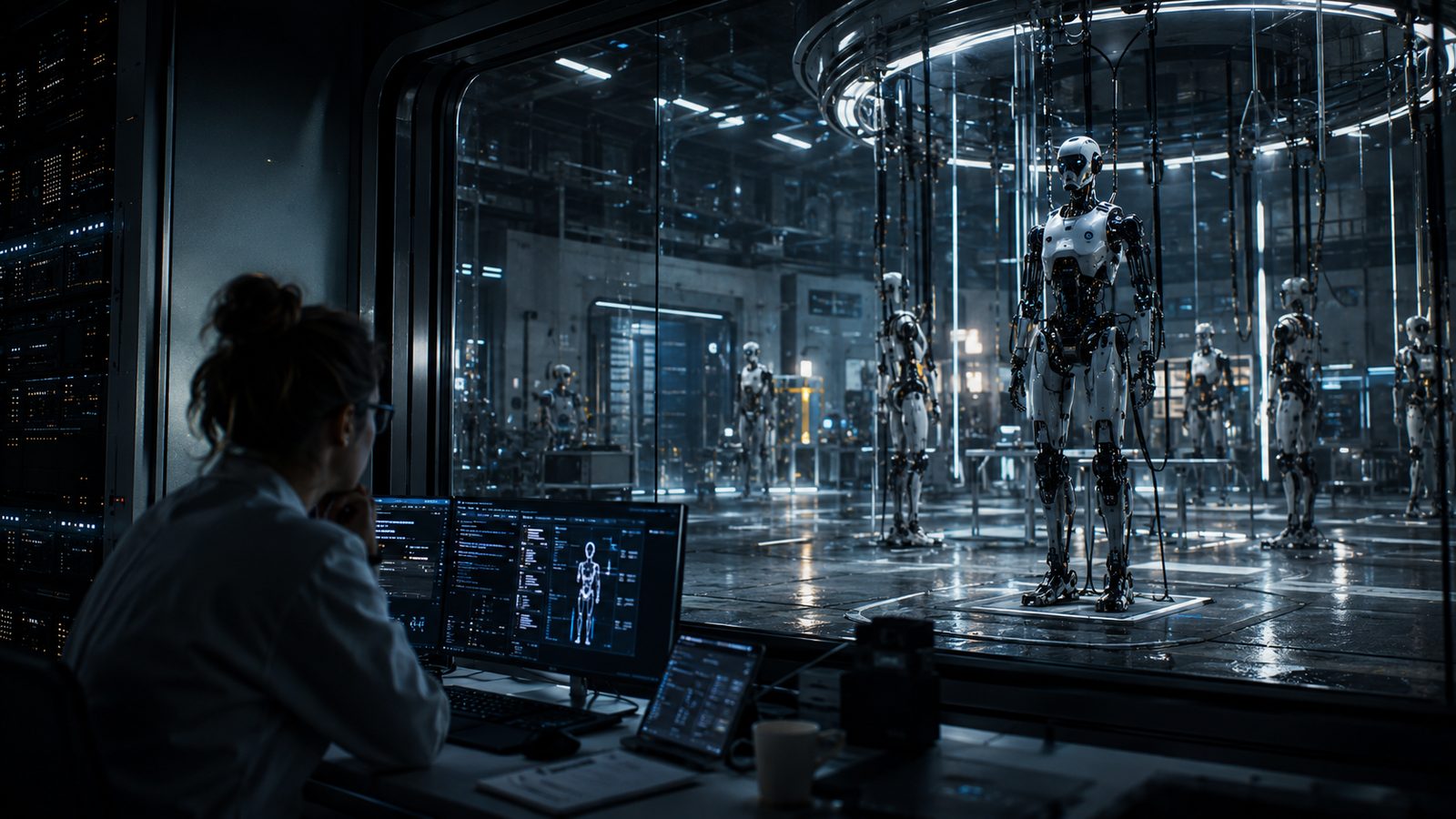
Elon Musk toured Tesla's Fremont factory on July 1 to see its newly converted Optimus Gen 3 production line — built in the space Model S and Model X occupied until their production ended in early May. Musk described the conversion timeline as "insanely fast," calling it unprecedented for any other manufacturer. Initial production on the line is expected to begin in late July or August.
The capacity claims attached to it are large. Fremont's line is designed for an eventual capacity of 1 million Optimus units a year. A second, larger factory under construction at Giga Texas targets long-term annual capacity of 10 million units, with volume production there aimed at summer 2027.
The part that isn't fast
A converted line is a real, visible fact — something now physically exists that didn't a few months ago. What it can actually produce at scale is a separate question, and a harder one. Each Optimus involves roughly 10,000 unique parts, and unlike a car — which rides on a century of established automotive supplier networks — a humanoid robot has no comparable supply chain to draw on yet. Tesla's own reporting acknowledges the ramp will be slow regardless of how fast the line itself came together, precisely because the parts ecosystem has to be built alongside the robot rather than sourced off the shelf.
The factory converted in weeks. The supply chain it needs doesn't exist yet, and no announcement can build that any faster.
Three companies, three bets on the bottleneck
This lands the same week Agility Robotics and Unitree both moved toward public listings. Line them up and three different wagers on where humanoid manufacturing actually gets hard come into view. Tesla is betting on vertical integration: own the factory, own the parts problem, iterate in-house. Agility is betting a public listing and outside capital gets it there faster. Unitree is betting on volume first, sophistication later, backed by Chinese state-adjacent industrial capacity. None of the three has yet proven its bet was the right one — they're running the experiment in parallel, in public, for the first time this year.
What is not established
Tesla has said more than 1,000 Gen 3 units were already operating inside the factory as of January, described as running for "real-world learning and AI training" — that figure and its framing are Tesla's own, with no independent count of finished, field-ready, or sold units available. The 1-million and 10-million annual figures are long-term design targets for the manufacturing lines, not production numbers for this year or next, and Musk's "insanely fast" characterization is his own assessment of his own company's timeline.
What each Optimus number in this story actually covers
- 1,000+ · units
- Operating inside the Fremont factory as of January 2026
Includes: Tesla's own count of Gen 3 units running for internal real-world learning and AI training
Excludes: Any finished, field-ready, or sold unit; independent verification of the count - 1 million/yr · design capacity
- Fremont line's eventual target
Includes: A long-term manufacturing-line design target
Excludes: Any near-term production number for this year or next - 10 million/yr · design capacity
- Giga Texas line's long-term target
Includes: A larger, still-under-construction factory's design target, aimed at Summer 2027 volume production
Excludes: Confirmation the target has been met or that construction is complete - 10,000 · unique parts
- Per Optimus unit
Includes: Tesla's own estimate of parts with no established mass-production supply chain
Excludes: A timeline for when that supply chain exists
- Tesla converted its Fremont Model S/X line into an Optimus Gen 3 production line, touring it July 1.
- Musk called the conversion 'insanely fast'; the line targets an eventual 1 million robots a year.
- A second, larger factory at Giga Texas targets 10 million units annually, volume production by Summer 2027.
- The real bottleneck isn't the line — it's 10,000 unique parts with no established supply chain yet.
- Caveat: capacity figures are long-term design targets, not near-term output; unit claims are Tesla's own.